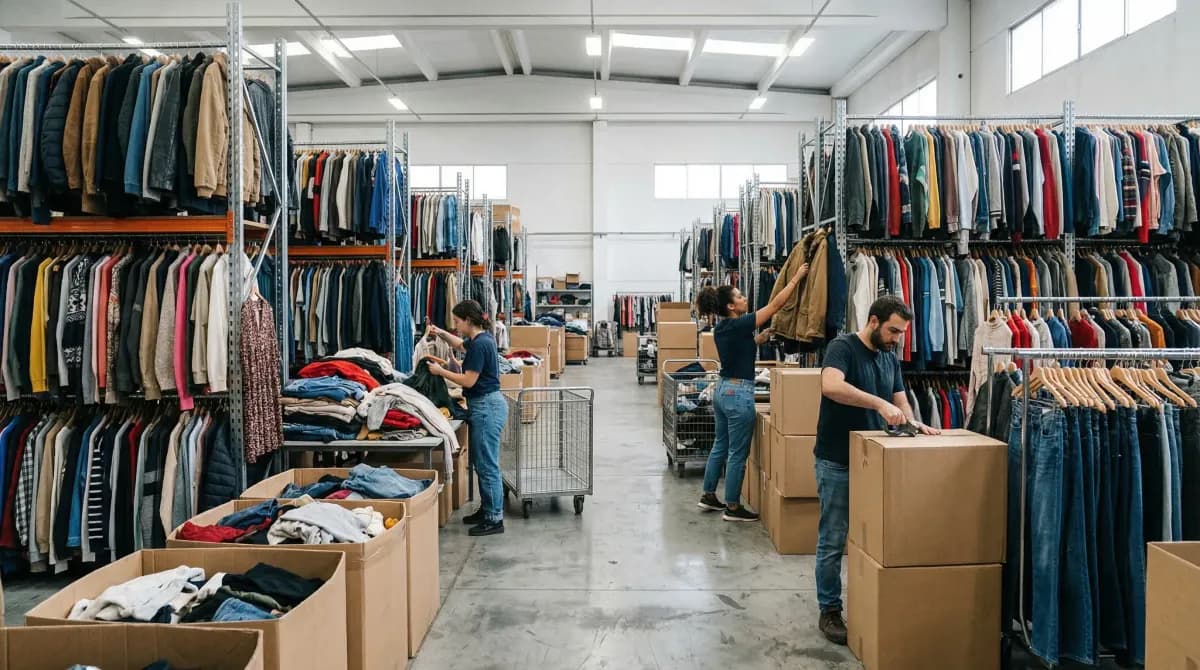
The secondhand clothing trade has become one of the most dynamically growing segments of the global fashion market over the past decade. What was once a pastime at small-town flea markets is now a multi-billion euro industry: according to ThredUp's 2024 Global Resale Report, the second-hand market is expected to reach $350 billion by 2028 – and that number continues to accelerate.
This trend is clearly visible across Central Europe. More and more small retailers, online sellers and boutique owners are recognising that there is enormous demand for premium quality, curated used clothing – especially as inflation pushes consumers to make more thoughtful spending decisions. Second-hand is no longer just the cheaper alternative: it is increasingly the symbol of sustainable fashion, individuality and quality.
Ruhaimport Kft. has 17 years of experience: since 2009, we have supplied premium textile goods to traders in Hungary, Slovakia and Romania. We share that knowledge in this guide – everything you need to launch a successfully operating secondhand clothing business.
Who is this guide for?
For beginner entrepreneurs considering launching a secondhand clothing business; for existing traders looking for new categories or suppliers; and for anyone who wants to work with a reliable, transparent used clothing wholesaler.
The second-hand clothing industry was once associated with lower income groups. That image has completely changed. Today, Millennials and Gen Z consumers proudly shop second-hand – in fact, they actively seek out unique, branded pieces that aren't available on every high street.
The fashion industry is one of the world's most polluting sectors: producing a single cotton T-shirt requires nearly 2,700 litres of water, and more than 92 million tonnes of textile waste is generated globally every year. Younger consumers are increasingly aware of these figures and prefer reusable, sustainable clothing over fast fashion. This shift creates a direct opportunity for secondhand traders: you can communicate not only the price advantage, but also the environmental value of your offer.
Launching a traditional fashion boutique typically requires millions in investment: seasonal collections, stock, a showroom, and mandatory minimum order quantities from brand distributors. By contrast, used clothing wholesale can be started with significantly less capital. The risk is further reduced by the fact that the second-hand market is far less seasonally volatile – a well-preserved branded coat can sell from spring through to autumn, meaning more predictable cash flow and lower inventory risk.
- Low minimum order quantity – Orders start from just 15 kg, meaning no large financial risk upfront.
- No seasonal constraints – Stock is available all year round and you won't be left sitting on unsold goods.
- Flexible categories – From the premium Cream category to the budget-friendly Original bales, everyone can find the right price point for their business model.
- Fast turnover – Well-priced, good-quality clothing sells quickly, especially through online channels.
💡 Market Tip
The highest demand for branded, good-condition second-hand items comes from the 25–40 age group. If you target this segment, the Cream category is the best investment: you'll benefit from higher selling prices and a discerning, loyal customer base.
At Extra Használtruha Nagykereskedés, you can purchase stock across four clearly defined quality levels, each representing a different target audience, sales channel and profit margin.
| Category | Quality | Price/kg | Ideal Channel | Margin |
|---|---|---|---|---|
| 💎 Cream | New / near-new, branded | 2,400–3,000 HUF | Vinted, webshop, Instagram | High 60–120% |
| ⭐ Extra | Very good, branded | 2,000–2,400 HUF | Facebook, Vinted, markets | Med-High 40–80% |
| 🔵 A+ | Good, no tears or stains | 1,700–2,000 HUF | Flea market, physical shop | Medium 30–60% |
| 📦 Original | Unsorted mix, baled | 1,400–1,700 HUF | Own sorter / warehouse | Variable |
The Cream quality is the highest level in our range. Items are in new or near-new condition: they may have been worn once, or not at all. Branded products, current fashion trends, flawless condition – these define the Cream category. You'll regularly find pieces from well-known European brands that sell for far higher prices in retail stores.
If you run a premium online shop or a boutique, Cream is your category. On Vinted, good-condition branded items can sell for 40–60% of their original retail price – an impressive margin when you're buying at wholesale prices. Your target customer is typically discerning, willing to pay a little more for quality.
The Extra quality is the favourite of most resellers: very good condition, stylish, often branded items that have been worn just a few times. The price-to-quality ratio is the most attractive here. If you're just starting out, this is the recommended first order – easy-to-sell items, predictable results.
The A+ quality includes items that are in good condition but have been worn more intensively: no tears, stains or heavy wear, but they no longer have that near-new feel. This category is perfect for the mass market – flea markets, local bazaars, families. A+ items sell quickly when priced and presented correctly.
The Original category is the most affordable and offers the greatest flexibility. Bales contain unsorted mixed content – you don't know the exact breakdown beforehand. This option is for those who want to sort the stock themselves and have the capacity to do so. Those who know what they're looking for can access Cream or Extra quality items at rock-bottom prices, then sell the better pieces at higher category prices.
One of the most common concerns in used clothing wholesale is that the goods received don't match expectations. At Extra Használtruha Nagykereskedés, this problem is a thing of the past.
The Video Check guarantee means that every lot can be viewed on video before ordering. You're not looking at catalogue photos – you're seeing the actual current stock, exactly as it comes out of the warehouse.
Informed Purchase
You know exactly what you're buying before you pay. No unpleasant surprises at delivery.
Surplus Buy-Back
If the received goods don't match what was promised, we buy back the non-conforming remainder from you.
Transparent Grading
Four clearly defined quality levels – every product meets the standard promised for its category.
Most used clothing wholesalers send photos – if they send anything at all. Video Check goes a step further: it shows the goods in motion, in real conditions. This isn't a marketing gimmick; it's a concrete business commitment that builds long-term trust with buyers.
The market is full of offers – stock of varying quality, varying terms, and varying levels of trustworthiness. Before placing an order with any wholesaler, it's worth checking a few critical criteria.
- Transparent product information – Video or photo documentation before ordering. A reliable partner will never ask you to buy blind.
- Clear quality grading – Precisely defined levels (Cream / Extra / A+ / Original). Avoid traders where everything is labelled "good quality" – that means nothing concrete.
- Returns and guarantee policy – Is there a complaints process? A buy-back guarantee provides real security.
- Flexible minimum order quantity – A 15 kg minimum allows smaller businesses to order economically.
- Reliable delivery and timescales – Precise delivery dates, tracking, and clear communication.
- Customer service and personal contact – Can you easily reach the seller? Are your questions answered promptly?
- Experience and references – How long has the company been in business? Ruhaimport Kft. has been operating since 2009 – that alone is a sign of trust.
✓ Practical Advice
On your first order, don't go straight for the largest quantity. Test with a small amount (15–30 kg), assess the quality and delivery, and once you're satisfied, scale up. A good wholesaler will expect this from new customers.
Purchased stock doesn't generate revenue by itself – it's the method, channel and strategy of your sales that determine whether your business is profitable.
A great photo is the alpha and omega of online selling. Even the finest Cream category piece can fail to sell if photographed poorly.
Natural Light
Photograph by day, near a window. Avoid yellow artificial light that distorts colours.
Neutral Background
White wall, grey backdrop – nothing that draws attention away from the garment. Use a dress form if you can.
Detail Shots
Photograph the brand label, fastenings, and special details. This builds trust and reduces returns.
Negotiation Room
Buyers love a bargain – pricing in a small margin for negotiation increases the likelihood of a sale.
Vinted is now one of the most useful second-hand platforms across Central Europe. Facebook Marketplace works particularly well for local sales – lower shipping risk, option for in-person pick-up. If you're serious about building a business, a dedicated webshop or Instagram shop is worth considering: the best way to build a brand without paying platform commissions.
💡 Seasonal Tip
Children's clothing maintains stable demand all year round – particularly for the 0–6 age group. Parents regularly replace children's clothes as they grow, and are happy to buy good-condition second-hand items. Specialising in childrenswear means operating in a predictable, year-round market.
The secondhand clothing trade is one of the most promising business opportunities in Central Europe in 2026. The key to success is choosing the right category, building a relationship with a reliable wholesale partner, and following a consistent sales strategy.
Key Takeaways:
- Cream: premium online selling, high margins – Vinted, own webshop.
- Extra: best value for money for resellers and online traders.
- A+: flea market, physical shop – fast turnover, broad audience.
- Original: own sorting, lowest purchase price – requires experience.
- Video Check guarantee: view the stock before ordering – no surprises.
- Minimum order: 15 kg, in 5 kg steps – accessible even for small businesses.
- Payment methods: card, bank transfer, cash on delivery.
The secondhand clothing trade is more than just a business – it's part of a movement. Every garment that finds a new owner through the second-hand market is a step towards a more sustainable textile industry. You're contributing to reducing overproduction, extending the life cycle of clothing, and giving your customers something no fast-fashion store can offer: uniqueness, quality and conscious choice.